

In the international market, there is a common assumption about African customers:
many people believe that price is always their top priority.
However, through our long-term cooperation with customers in Africa, we have learned that this assumption is often inaccurate. Real market needs are far more practical and specific.
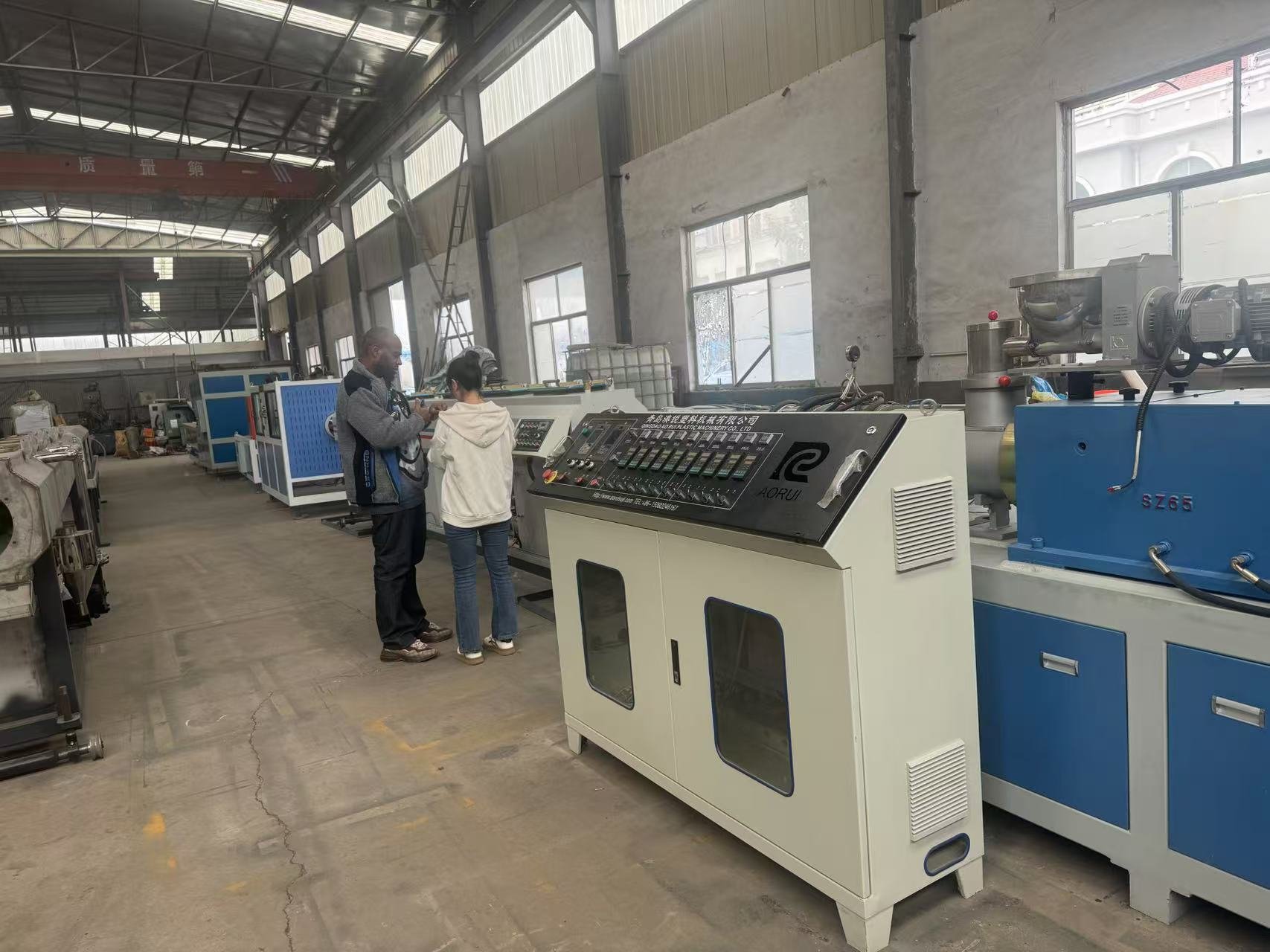
Recently, we reviewed feedback from one of our long-term customers in Nigeria. We have been working with this customer for many years, and the plastic window profile equipment has been running steadily in their factory. During multiple technical discussions, the customer repeatedly emphasized one key point — not price, but the ability of the equipment to operate under an unstable power supply.
In Nigeria, as well as in many other African countries, unstable electricity is a daily reality for manufacturing companies. Frequent power outages and voltage fluctuations force many factories to rely on diesel generators for regular production. Under such conditions, plastic machinery faces much higher requirements than in areas with stable electricity.
The customer pointed out that the equipment must:
Run stably under voltage fluctuations
Have a simple and reliable control system for easy operation
Be easy to manage and maintain on site
Adapt to changing working conditions instead of relying on ideal power supply assumptions
Based on these real local conditions, we made targeted adjustments to the plastic equipment(such as plastic profile machine, plastic pipe machine) configuration and technical details. Instead of applying a standard setup, we optimized key aspects such as motor selection, electrical control stability, protection systems, and overall operational simplicity to better match the actual working environment.
These adjustments do not necessarily appear as “higher technical parameters” on paper. However, they directly affect the machine’s usability, stability, and long-term operating cost in real production. As a result, the equipment was successfully put into stable operation at the customer’s factory, further strengthening our long-term partnership.
This case once again confirms a principle we firmly believe in:
On-site conditions should always be the first parameter in equipment design and configuration.
Different countries and regions have significant differences in power supply, labor conditions, operating habits, and maintenance capabilities. A responsible machinery supplier should not only deliver machines, but also understand the customer’s real production environment and address potential challenges in advance through proper technical solutions.
Looking ahead, we will continue to accumulate on-site experience and maintain close communication with customers worldwide. Our goal is to provide plastic machinery solutions that truly fit real production needs — machines that are not only usable, but reliable, durable, and suitable for long-term operation.